



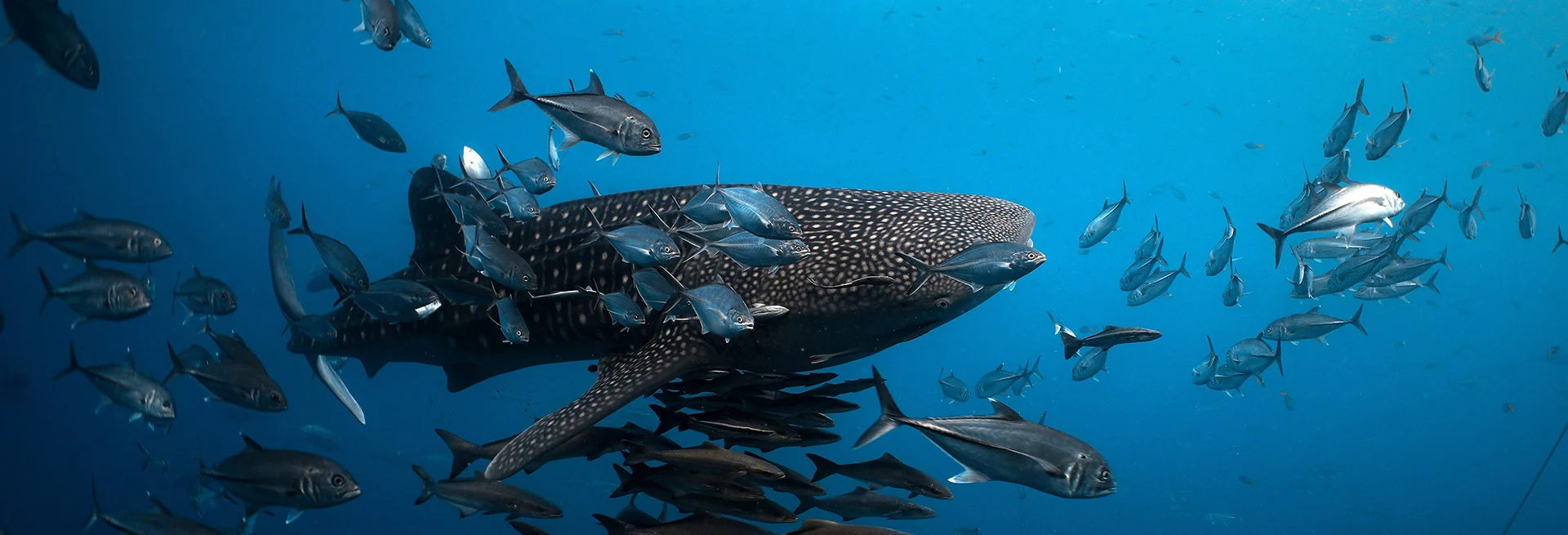


In answer to your question, sharks do live in Thailand: yes, but encounters are rare and most species are harmless to humans. The country’s tropical waters are home to more than 20 shark species, including reef sharks, bamboo sharks and the enormous (but docile) whale shark. Most sharks found around Thailand’s islands are either small reef species or gentle filter feeders, which tend to avoid swimmers entirely.
For the vast majority of travellers, the only time you’re likely to see one is while diving or snorkelling at offshore reefs – and even then it’s considered a lucky sighting, rather than anything to fear.
See more luxury Thailand holidays

Are sharks dangerous in Thailand?
Not really.
Shark attacks in Thailand are extremely rare, especially compared with destinations such as Australia, South Africa or the United States.
Recorded incidents over the past century are very few, and the overwhelming majority of visitors swim in Thai waters every year without ever encountering a shark (or even thinking about it)
The reason is simple: the species most commonly found in Thailand – such as blacktip reef sharks and bamboo sharks – are small, shy and prefer coral reefs rather than busy beaches.
In other words, you’re far more likely to spot colourful reef fish, sea turtles or a zany longtail boat captain than anything remotely resembling a Hollywood shark scene.

What sharks live in Thailand?
Thailand sits between the Andaman Sea and the Gulf of Thailand, both warm tropical ecosystems with thriving coral reefs and rich marine biodiversity.
These waters support a surprising variety of shark species. Here are some of the most commonly spotted.
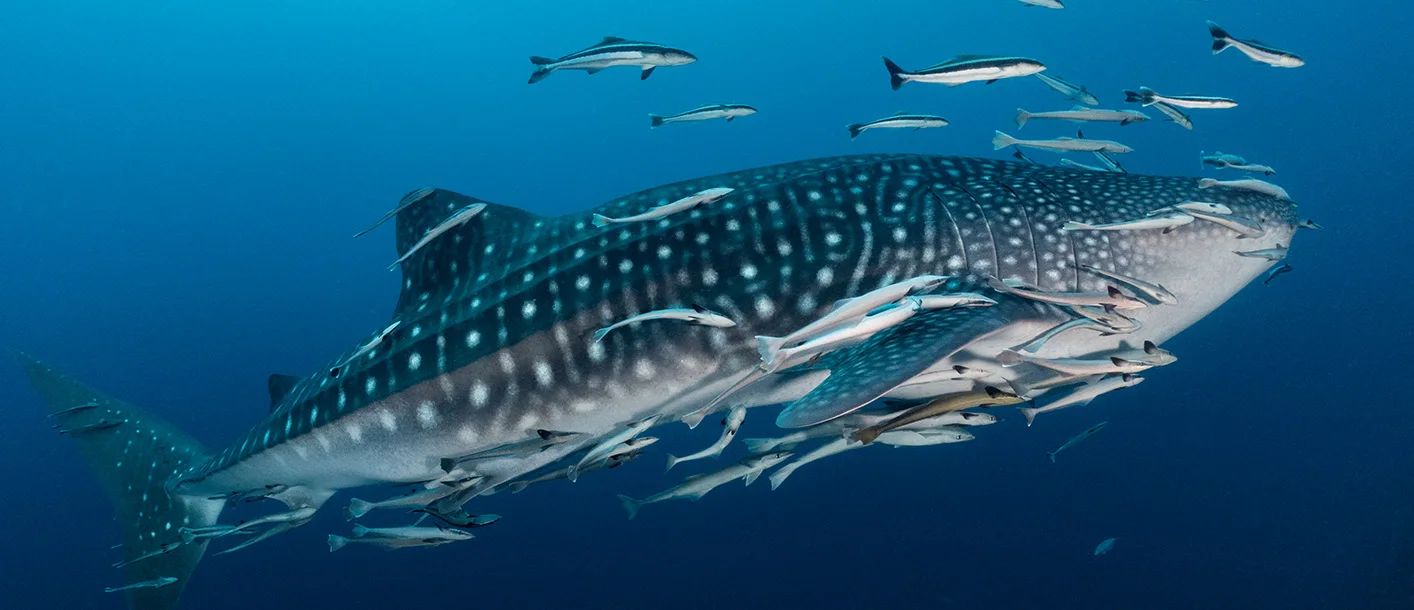
Whale sharks
The whale shark is the largest fish in the world, growing up to around 12 metres in length. However, despite their size, these gentle giants feed on plankton and tiny fish, making them completely harmless to humans.
Seeing one in the wild is considered one of the ocean’s great bucket-list experiences, and Thailand is one of several places in Southeast Asia where sightings occasionally occur.

Blacktip reef sharks
Blacktip reef sharks are one of the most common sharks in tropical waters.
Usually growing to around 1.5–1.6 metres, they’re easily recognised by the dark tips on their fins and tend to patrol shallow coral reefs in search of fish.
They’re generally timid and will almost always swim away if approached, so keep your eyes peeled and count yourself lucky if you see one of these agile ocean predators in miniature.
Leopard (zebra) sharks
Leopard sharks – more accurately called zebra sharks – are another species frequently seen by divers.
These beautifully patterned sharks often spend the daytime resting on sandy seabeds near reefs before becoming more active at night. Calm and slow-moving, they’re considered one of the most relaxed sharks divers encounter in Southeast Asia, so definitely don’t panic if you see one.
Bamboo sharks
Bamboo sharks are small bottom-dwelling species usually found hiding among coral or rocks.
Most grow to less than one metre long, making them one of the smallest sharks in Thailand’s waters and they’re far more likely to be resting on the seabed than actively swimming through open water.

Rarer shark sightings
Divers occasionally report sightings of larger species such as hammerhead sharks, tiger sharks and bull sharks in Thai waters.
However, these tend to inhabit deeper offshore areas and are rarely encountered by swimmers near beaches.

Where are the best places to see sharks in Thailand?
Located in the Andaman Sea northwest of Phuket, the Similan Islands are widely considered among the best diving destinations in Southeast Asia.
Clear water, thriving coral reefs and strong nutrient currents attract reef sharks and occasional whale sharks. So, if you want to maximise your chances of seeing one of the ocean’s most mythologised creatures, the Similan Islands are a fairly good bet.
Richelieu Rock
Often ranked among the top dive sites in the world, Richelieu Rock lies within Mu Ko Surin National Park.
This submerged pinnacle attracts enormous schools of fish, manta rays and seasonal whale sharks.
For experienced divers, it’s one of Thailand’s most thrilling underwater locations. However, due to its remote location, currents and inhabitants, it is best kept for those with a good deal of dive-time racked up under their belts.

Koh Tao
Koh Tao has earned a global reputation as Thailand’s diving capital, and is probably the most accessible for beginner or intermediate divers – or those with less time to travel to the niche destinations mentioned above.
Nearby dive sites such as Chumphon Pinnacle and Sail Rock are known hotspots for whale shark sightings, with hundreds of recorded observations over recent decades.
Sightings tend to be most likely during plankton-rich months between March and June.
Koh Phi Phi
The Phi Phi Islands offer excellent snorkelling and diving close to Phuket and Krabi which, again, means greater accessibility for those visiting the popular resorts of the Thai mainland and nearby islands.
Blacktip reef sharks are sometimes seen around shallow reefs here, particularly early in the morning when the water is calm.
Can you swim with sharks in Thailand?
Yes – although it usually involves joining a guided snorkelling or scuba diving trip.
Responsible dive operators follow strict guidelines to protect both guests and wildlife, including maintaining safe distances and avoiding feeding behaviour.
The ultimate dream encounter is swimming alongside a whale shark as it drifts slowly through open water – a moment many divers describe as the highlight of their time in Thailand. If this is an experience that calls to you, speak to your personal travel manager and we will do our best to advise on locations, travel times and providers to give you the highest chance

Should sharks stop you visiting Thailand?
In short: absolutely not.
Thailand remains one of the world’s most popular beach destinations, welcoming millions of visitors each year who swim, snorkel and dive without ever seeing a shark.
And if you do happen to spot one?
You’ll likely count yourself lucky. A fleeting glimpse of a reef shark weaving through coral or the distant silhouette of a whale shark gliding through blue water is far more awe-inspiring than alarming. If anything, it’s a reminder that Thailand’s seas still hold a little wild magic beneath the surface.
For help planning your dream luxury Thailand itinerary – with or without the close marine-life encounters – contact Winged Boots on 0203 816 0985 or enquire online today.
Alternatively, read on to discover which part of Thailand is right for you.

Winged Boots:
The Lifestyle Brochure
Blending the latest luxury travel trends, inspiring editorial and exclusive customer interviews with our curated list of the top hotels in the world, allow our brochure to spark your wanderlust.
order your copy today
next trip today
Our expert team of personal travel managers are ready to craft your perfect journey. From business trips to luxury leisure holidays, simply put your pin in the map, and we’ll make it happen.
 START A WHATSAPP CHAT